Although more and more people are becoming aware of and learning about permaculture, it is still not widely known and is surrounded by many misconceptions. As researchers, we are encountering permaculture increasingly frequently, whether in food system research or nature-based solutions research. This is why we decided to interview István Lőrinczi, a permaculture designer and trainer about the basics of permaculture and its transformative potential in urban food systems.
What is permaculture?
Many people think that permaculture is just a method of gardening. In fact, as Bill Mollison, the developer of the permaculture approach, put it, it is ‘a design system for creating sustainable human environments’. In our training courses, therefore, we don’t teach you how to plant tomato seeds or how often to water them. Instead, we teach you how to design and build a system in which you can grow healthy tomatoes. Here, the term ‘healthy’ refers not only to you, but also to all the living things connected to your tomatoes and to you — from soil microbes and marigolds to bumblebees. However, if you don’t want to grow vegetables, you can design your garden to fulfil the functions you desire, such as providing shade and cooling your house while also providing space for birds to nest and ensuring there are flowers in bloom from spring to late autumn, all while being healthy for wildlife. If you plan it well, you, other living things and plants will thrive in it.
How does permaculture differ from general organic gardening methods?
The difference is that we consider all elements of the given environment during the planning process. It’s not just about planning where the tomatoes will thrive; we also consider the area’s topography and microclimate. During the planning process, we also think about how our activities will affect the local wildlife, such as hedgehogs, dragonflies, and butterflies. We also consider how to keep potential pests away from the tomatoes without using chemicals. It’s a little more complicated than that, of course; this is just a simplified example.
So permaculture isn’t for everyone? Only for those who have studied ecology?
Permaculture is for everyone, but you need to acquire the necessary knowledge. It is important to start with observations and document them. This is something that anyone can do, and we teach it during our training courses. Once you have learned the approach, you can start creating your own permaculture environment. Of course, practice makes perfect here, too. It is an exciting learning process. You will learn about plants, animals, the weather elements, and yourself.
We also refer to permaculture gardening as the “lazy gardener” method because, once I have planned my environment, I hardly have to work on it. For example, I might spend 100 hours planning, but then only have to work for an hour thanks to effective preparation. Of course, this means you have to spend time observing and planning, but it’s worth it to ensure the small habitat or agricultural area I create functions well.
While researching the Tasmanian rainforest in the 1950s, Bill Mollison discovered a beautiful natural cycle: nothing is wasted, and plants and animals coexist harmoniously. He also realised that we could replicate this. Permaculture imitates the models and patterns that have worked well in nature for thousands of years. The focus is on working with nature, with humans at the centre — nature serves humans and makes their lives easier.
Permaculture is based on principles formulated in the 1970s by Bill Mollison and his student David Holmgren. It is based on scientific knowledge and is now widespread around the world. The three core principles are earth care, people care, and fair share.
Perhaps, the most significant advantage of studying permaculture today is that it provides a positive vision on the future. Many people are concerned, even anxious, that we have destroyed the land and water systems, and that animal and plant species are becoming extinct as a result of human activity. However, this anxiety disappears when we begin to learn the permaculture approach. Our general experience is that people believe it is possible to improve our environment, and that this is not that difficult. Fortunately, there have also been spectacular successes, and certain changes can be offset relatively quickly. This is a huge benefit of permaculture.
What significance can permaculture have for the present and future of cities?
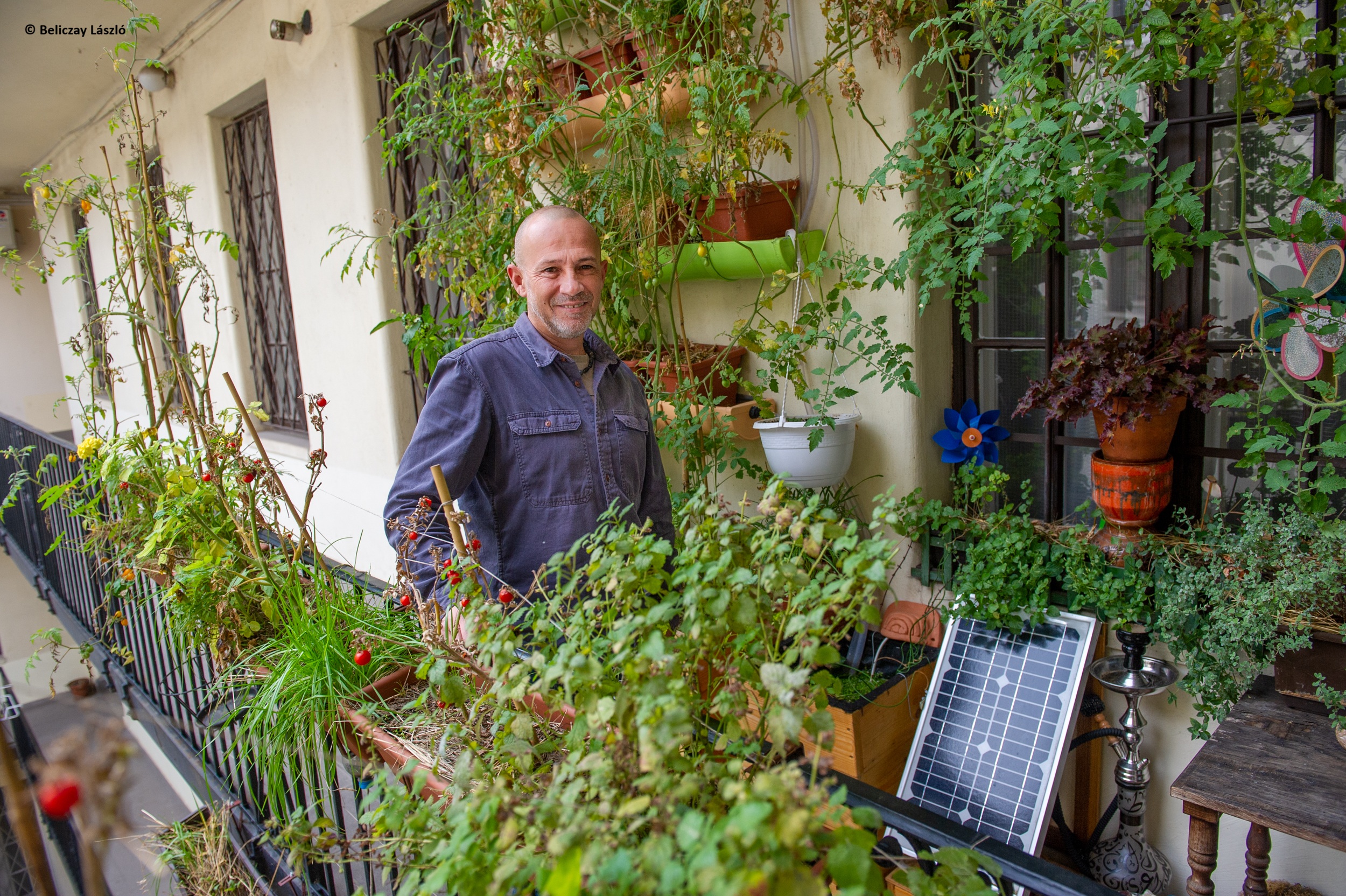
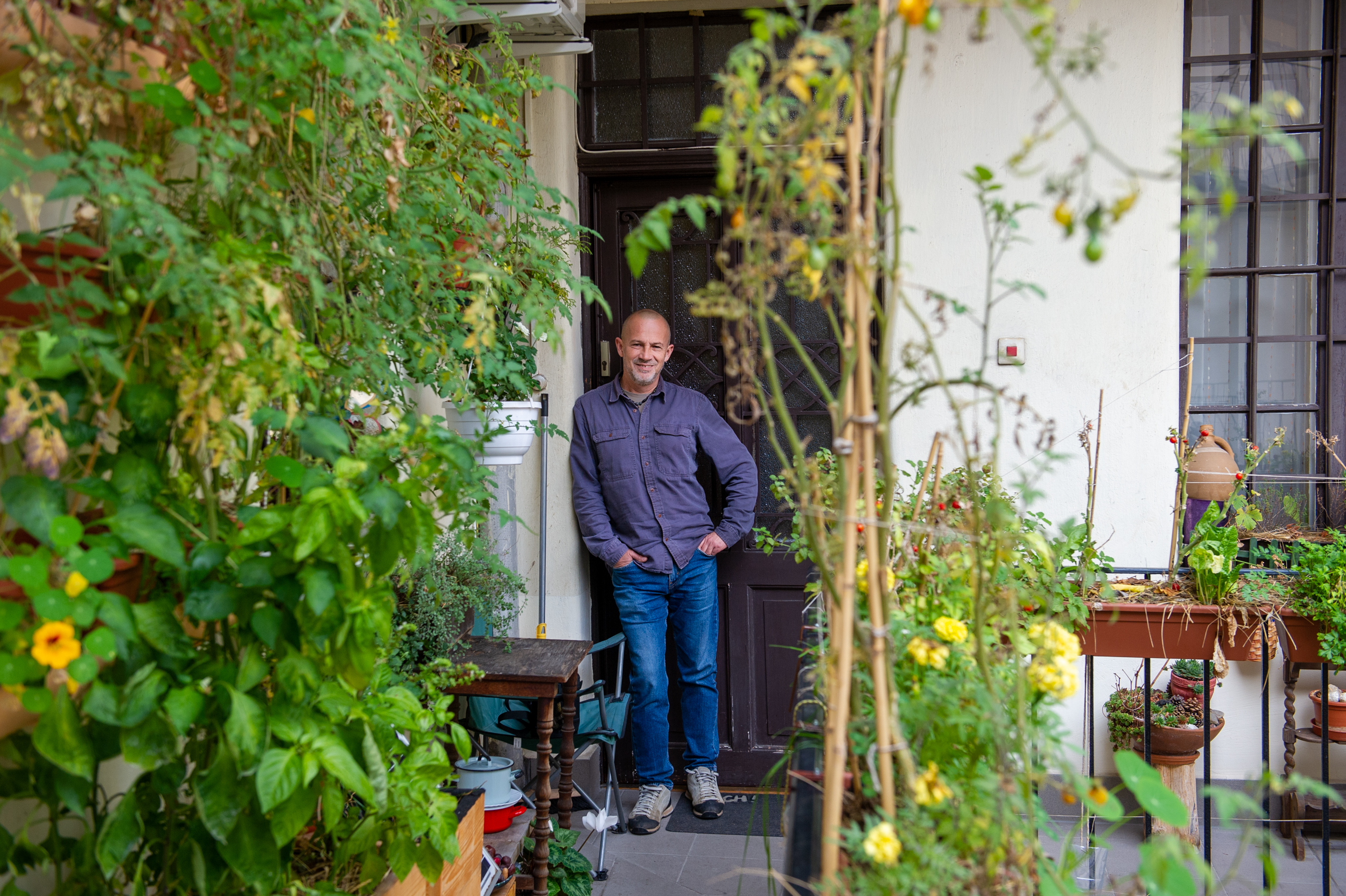
The permaculture approach can be used anywhere; it doesn’t matter where you work with it. It is a design approach that can be used to design anything from a balcony to a public space or even a green garden in the desert. I have created a 6-square-metre growing area on my balcony where I grow almost 80 different types of plants. Yet I am only connected to nature through the atmosphere. Nevertheless, I have managed to create habitats and even have two mini tub ponds.
I see its significance in an urban environment in the fact that an increasing proportion of the world’s population is living in cities. Currently, this figure stands at over 4 billion people, representing more than half of the global population. According to expert estimates, this figure will rise to 75% in 25 years. All of these people produce a lot of waste. Just consider green waste: if we didn’t throw it in the bin but used it all, we could completely supply the surrounding farms with enough compost to fertilise the land, which is one of the most important sources of nutrients for arable land.
A permaculture approach could also be used to transform small urban gardens. With careful planning, a 100 m² garden could provide a family of four with enough vegetables for a whole year. However, I’m not only considering food production. I’m also considering how we could use water differently by applying the principles of permaculture, which would help to solve the problem of flash flooding that cities regularly experience. If the city were well planned, small gardens would retain water, thus reducing the load on the sewer system.
We could also make use of roofs, which offer a wealth of possibilities. However, by greening the façades and walls with plants, we can also influence energy consumption and the heat island effect.
It is crucial that this knowledge is incorporated into the curriculum of educational institutions. This will enable children in kindergartens to connect with the journey of food and, along with it, with nature from a very young age. Children need to see how a seed they plant can grow into a cucumber, for example. I work in several kindergartens in Budapest’s 9th district. In one of these, the children learn about ecological systems through stories. Then, they go out into the garden and observe the bee hotels after the teacher has explained what bees do in nature. They drink herbal teas for their snacks, which they grow and pick themselves in the garden.
Another kindergarten has a large garden where we created a forest garden and a vegetable patch. Instead of ornamental trees, we planted edible ones and modelled the different levels of a forest for the children. We also built a bee hotel and a hedgehog house, of course. I ran a permaculture training course for the teachers, who now use this method to teach the children in the garden. Last year, the children grew so many vegetables that they preserved some of them, such as courgettes and tomatoes, and organised a market for their families where they sold the preserves. They used the income to buy all sorts of things for the garden. In other words, the cycle has begun at that kindergarten. What makes me happiest of all is that, starting in January, the children at this kindergarten will be able to choose permaculture as an after-school activity. To my knowledge, this is the first kindergarten in Hungary where permaculture will be a separate activity.
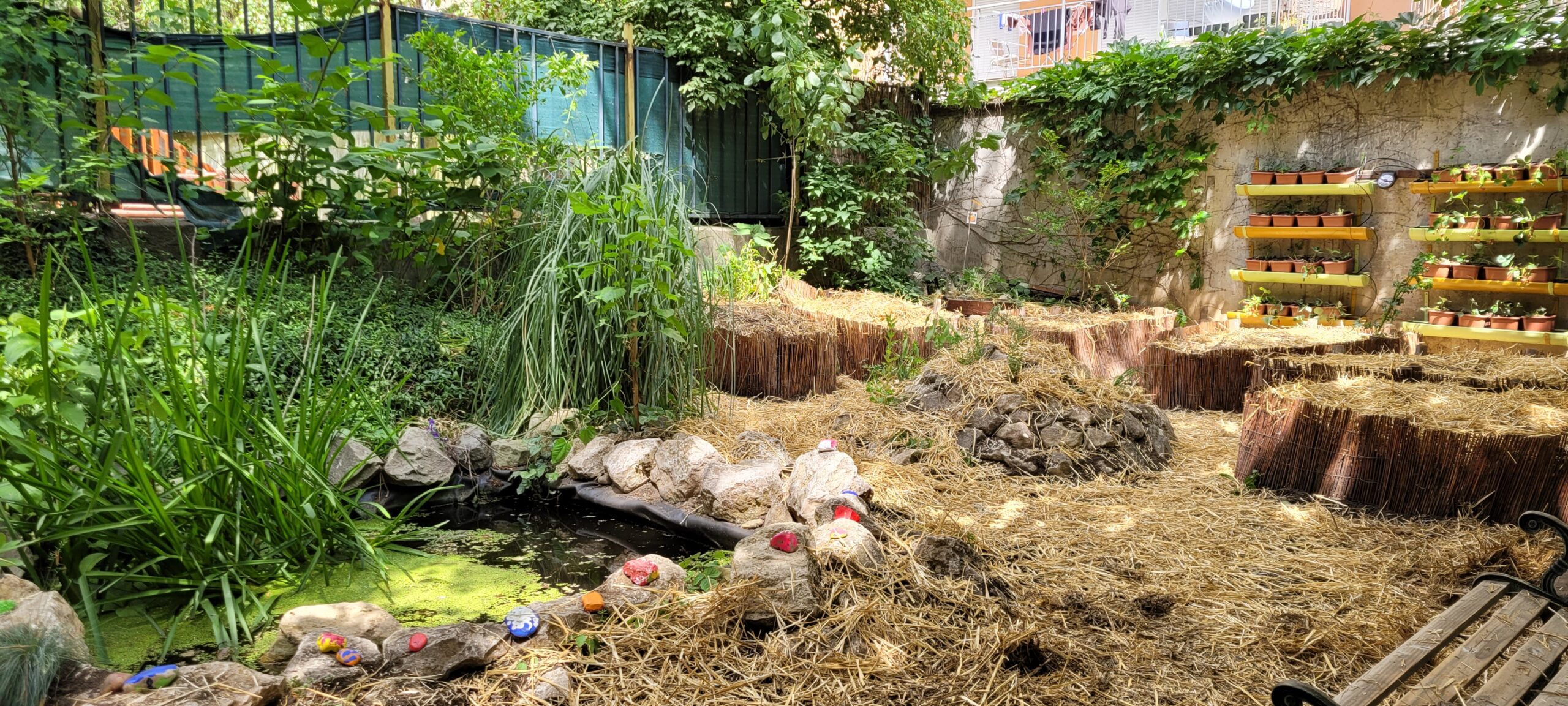
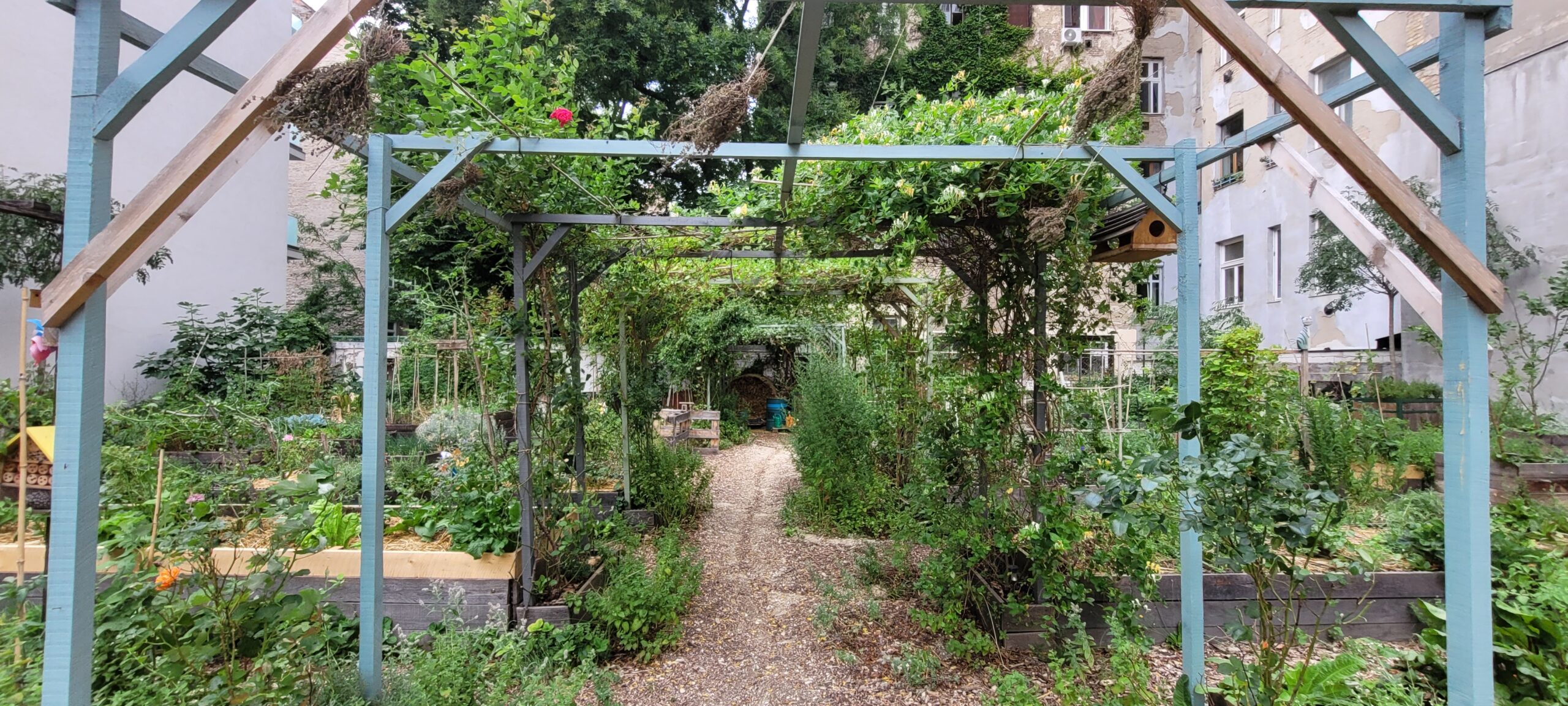
Many community gardens are operating in cities across Europe. Perhaps two of these are permaculture gardens in Budapest. Why would you recommend this method for community gardens?
Permaculture takes a holistic approach to gardening. Permaculture community gardens almost certainly have greater biodiversity because we create habitats, not just beds. This attracts and encourages many helpful animals and plants to move in, and we don’t use any chemicals, even those approved for organic farming.
If we have great tits and hoverflies, they eat the pests, but we need to create a suitable habitat for them in the garden to encourage them to move in. We can let the hedgehog come in and eat the slugs, but for this, we need to provide a hiding place where it feels comfortable. In other words, we need to identify the predators of the pests and create suitable habitats for them.
A general community garden considers the crops and which plants grow well together, but doesn’t really focus on creating ecological systems. While planting basil next to tomatoes is a good idea and something I’m seeing more and more often, it is just plant pairing, not permaculture.
We observe nature and imitate it. Every element in nature has multiple functions, which we examine before putting them to use. Even a stone can serve multiple purposes: it can provide shade and shelter for insects, and create the conditions necessary for moss to grow.
In a permaculture garden, we give each element multiple functions by design. For instance, if green peas are sown densely, they act as ground cover, which prevents the soil from drying out so quickly. Green peas are also very good at fixing nitrogen in the soil —as legumes generally are— which improves soil quality since nitrogen is one of the most important nutrients. Their most important function, however, will be that I will eat them. Therefore, my green peas will have at least 3 functions. When planning, we aim to give each element at least three functions and connect them, thus creating a multidimensional system.
Given that urban food systems need to be transformed in a sustainable direction, what role can permaculture play?
Permaculture’s emphasis on diversity and a rich natural environment increases stability. The more diverse a community is, the more resistant it is to disease and crises. Therefore, growing food on permaculture farms rather than in conventional agricultural systems increases food security. The latter are highly vulnerable as they grow only one type of crop over a large area. If a pest or disease arrives, it can destroy the entire crop.
Permaculture also increases food security because we do not use any chemicals, not even those used in organic farming, meaning there are definitely no toxic substances on the crops. People often ask what is wrong with the biological agents used by organic farmers. Nothing, except that they cost money. We avoid using any chemicals in our farming, not even nettle juice to kill plant lice, because we create such diversity in our gardens that many different creatures settle on the plants. These include lice-eaters such as lacewings and ladybirds. Because of the wide variety of insects, birds and bats also arrive, which keep the lice under control.
Permaculture strives for diversity, so the food supply that a garden or farm can provide is more varied. People would also eat healthier, as they would consume a wider variety of crops. In addition, their diet would become more varied and colorful due to the greater variety of foods available. Of course, we would have to give up some of our habits, such as having wheat flour available all year round, but we could start using other flours instead, such as chestnut flour or chickpea flour, which are also healthy.
Adopting a permaculture approach would increase the diversity of nature in cities, which is greatly needed given the poor ratio of natural to built-up areas in our cities.
As I mentioned earlier, all urban green waste can be used on a permaculture farm or in a garden. There is therefore no need to transport it to incinerators, where it is burned using a lot of energy and emitting pollutants. We use organic matter to enrich the soil. Healthy soil also contributes to food security as healthier soil leads to fewer plant diseases.
One of the basic principles of permaculture is the idea of a fair share. This means several things, including that if I have a surplus of something, such as zucchini or figs, I give it to someone who needs them. This ensures that people who cannot afford to buy or grow fresh fruit and vegetables also have access to them. This is why it would be beneficial to have as many permaculture farms as possible in and around cities.
Finally, community building is one of the most important effects of permaculture and would definitely have a very positive impact on urban communities. Permaculturists stick together, support each other and think in terms of community. Cohesive communities are necessary if we are to achieve change. This is particularly pertinent when it comes to a complex system such as the urban food system.
As part of the FoodCLIC Project, you have already delivered a balcony gardening training course to residents of Budapest’s 19th district. And the other session is ongoing. We have received lots of positive feedback from participants, who all left happier than when they started the course.
I have taught many courses before, but this was the first time I had seen such a positive change in the attitude of people over the age of 70. Although I had seen this change in attitude many times before, this was the first time it had happened with people of this age. This occurred despite none of the participants knowing what permaculture was when they arrived.
It was also good to see the project implemented in cooperation with the local government, with no cost to residents, who also received valuable gardening tools. Thanks to this funding, we were able to provide each participant with a worm composter and a handful of worms, for example. Having never done this before, I found it fascinating to observe how people immediately developed a sense of responsibility when given a tool for housing living creatures. For months afterwards, questions about earthworms kept coming up in the chat group: how they behave, how active they are, how much food they need, and so on. It was nice to read these, knowing that the plants will become so beautiful and healthy thanks to the worm compost tea.
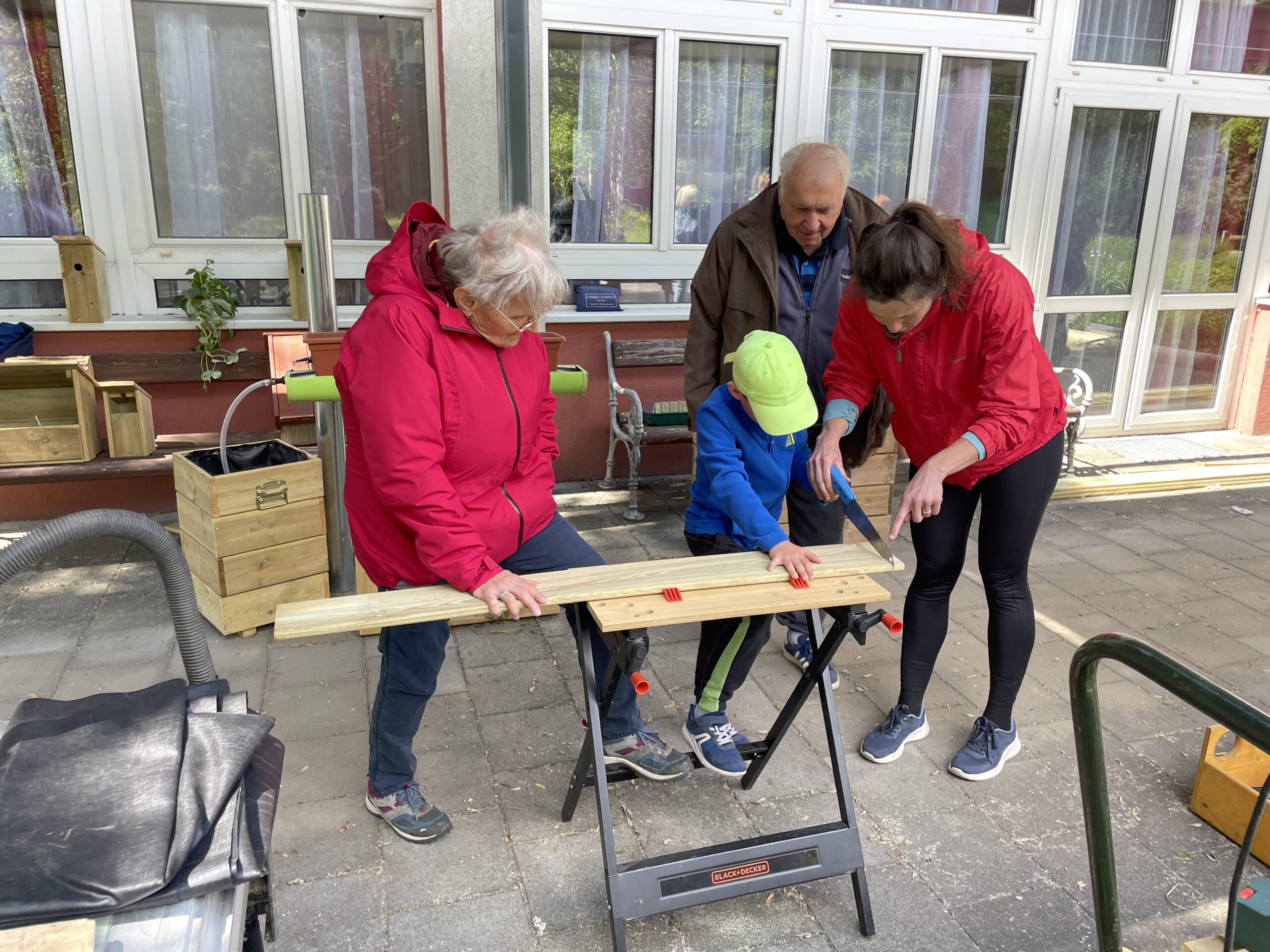
A new initiative has begun at the municipal level in Budapest. While municipalities have previously shown interest in permaculture, organising and financing permaculture courses for residents is a highly beneficial and progressive step. In addition to the 19th district, two other municipalities have launched, or will soon launch, a course entitled ‘Introduction to Permaculture’ for residents. There is no shortage of applicants. This demonstrates growing interest among both municipalities and residents.