After three years of intense and rewarding work, the PLANET4B Project has come to an end. It was a European research collaboration of 16 partners that investigated how behaviours and decisions affecting biodiversity are shaped and how they can be changed to serve both the environment and people. Read our summary here.
Through transdisciplinary, participatory and creative research across 11 place-based and sectoral case studies, PLANET4B explored how intersecting factors such as gender, age and culture influence attitudes and choices related to biodiversity, and developed tools and guides to support transformative change on the practical, personal, and political level.
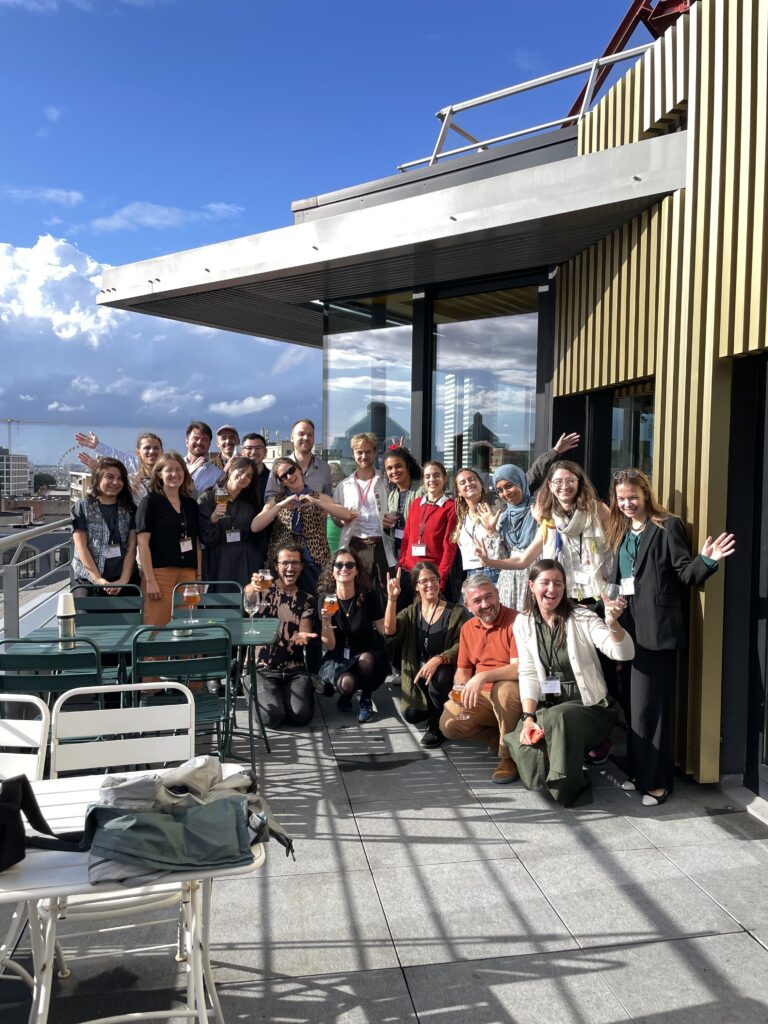
How to achieve transformative change – results from 11 case studies
The PLANET4B case studies show that transformative change for biodiversity does not emerge from isolated actions, but from combinations of interconnected elements that collectively alter how people, institutions and wider systems engage with nature and make biodiversity-related decisions (Karner et al., 2025). Across the diverse contexts and scales, the cases reveal recurring moments and conditions under which transformative processes begin to unfold: the creation of creative safe spaces that dismantle exclusion and build trust; knowledge co-creation and sharing through experimentation, dialogue, and recognition of diverse expertise; the strengthening of agency, particularly among marginalised and vulnerable groups, so that participants become stewards and actors of change; the formation of partnerships that bridge cultural and sectoral divides; and the re-imagining of regulations to enable social and environmental justice, sufficiency, circularity, and bottom-up initiatives.
Taken together, these five elements illustrate how transformation unfolds across the personal, political, and practical spheres, with agency emerging as a key outcome across all levels. The analysis in Deliverable 3.3 goes beyond documenting how transformative change unfolded in individual cases, and instead draws out insights that are relevant across different places and sectors. At a conceptual level, the identified pathway reflects Vogel and O’Brien’s (2022) proposition that meaningful transformation depends on moving across and beyond deeply embedded boundaries through transdisciplinary, transgressive and transcendent modes of action – an approach that the case studies actively put into practice.
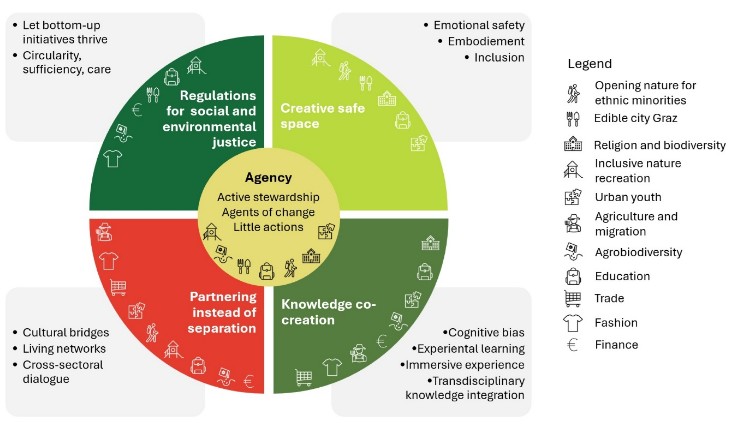
In addition, the synthesis also resonates with O’Brien et al.’s (2023) understanding of fractal agency within the three spheres of transformation. Where everyday practices are anchored in shared values such as care, dignity and fairness, they can generate repeating patterns of action that scale from local initiatives to institutional and regulatory change. As shown by the Transformative Change Stories, strengthening values and agency at the micro level can therefore contribute to wider systemic shifts, underlining that addressing biodiversity loss is as much about reconfiguring relationships and meanings as it is about reforming policies and institutions.
Care-Full Courses & Resources – methods and toolkits
A key output of the project is the Care-Full Courses & Resources platform, a free online learning environment offering engaging research methods and practical toolkits tailored to educators, policymakers, NGOs, business leaders and researchers. These resources include structured courses on biodiversity and engagement techniques, guidance on building supportive learning communities, and a catalogue of creative, well-tested methods designed to open dialogue, reflect on assumptions, and connect everyday decisions with broader ecological concerns. Developed by PLANET4B experts, the materials are evidence-based and aim to equip users with skills for inclusive, reflective and action-oriented approaches to engaging people with biodiversity.
What we learned from our case studies – and where this leads us

In the biodiversity education case study, Eszter Kelemen and Kármen Czett worked together with three schools, covering both urban and rural areas of Hungary. It also featured the transformative change story of a co-created school garden, where researchers, teachers and students transformed an abandoned green space into a vibrant garden. Using experiential and arts-based learning – accessible on the Care-full Resources platform – deepened students’ connection to nature and cultivated shared values of care, cooperation and ecological stewardship. The accompanying infographic visualises how such nature-based, participatory experiences – including gardening, photovoice and outdoor lessons – foster safe collaborative spaces, strengthen relational values, and support reflection on socio-ecological systems, thus contributing to changes in norms, behaviours and school practices. Research emerging from this case was also published in the International Journal of the Commons (Kelemen et al., 2025), while biodiversity lesson plans are also available on our website.
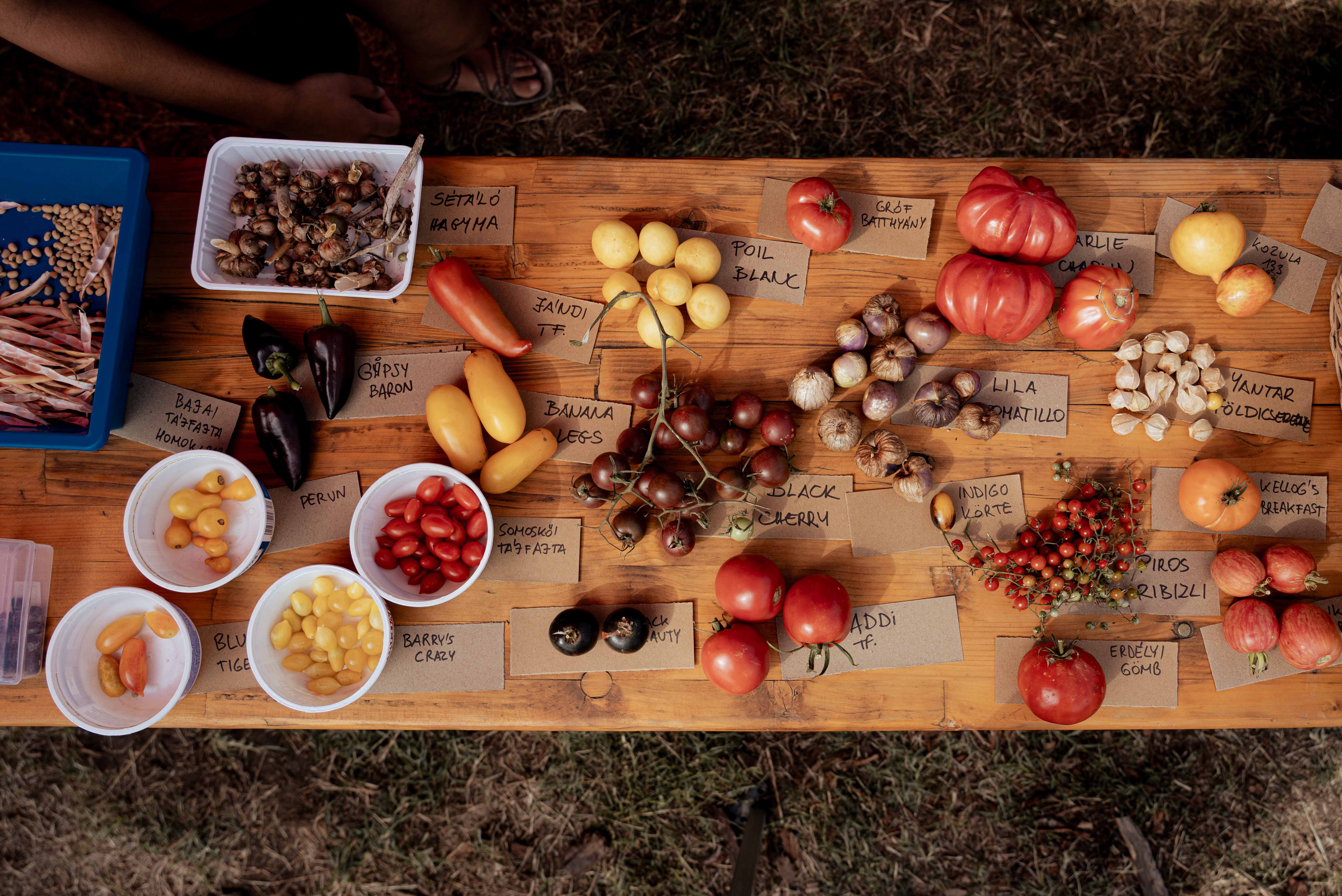
Within the agrobiodiversity case study, Borbála Lipka and György Pataki focused on the seed system of open-pollinated vegetables, learning about the role and the work of seed guardians and exploring the possibilities of a care-based seed network. Based on expert interviews and the collaborative work with their Stakeholder Board as well as a Hungarian community seed network, Magház Association, several micro projects were developed, including an agrobiodiversity photo contest and a cookbook focusing on lesser known vegetables. Another outcome was a policy brief for decision makers who want to support the enhancement of agrobiodiversity through the acknowledgment and support of the self-organising dynamics of the informal seed system. The case study contributed with three methodology guides for the educational Care-Full Resources developed within the project.
Looking ahead, the knowledge accumulated through PLANET4B is being carried forward in several projects:
- FairNature is a Biodiversa+ project that aims to develop nature-based scaling approaches for just transformative change. Our action case in focusing on community gardens in the 8th district of Budapest where we are planning to apply arts-based methods to enhance engagement;
- A new Erasmus+ mobility programme, won by our partner school, enables 14 students and five teachers to explore how the local ecosystem around their school – including the school garden – can be improved through measurements, observations and shared learning with partner schools in Germany and Austria. At the same time, the school is applying to become an official national “base institution”, which would allow its school-garden practice to be shared more widely with other schools;
- Building on the connections made within the project PLANET4B, Magház Association and FUG (a practice partner from the edible city case study in Graz) developed a Small Scale Partnership project within the Erasmus+ framework of the European Union, focusing on urban seed systems and small-scale commercial seed growing.
By continuing to apply and adapt the tools and lessons from PLANET4B, the aim is to enable broader, more inclusive pathways for environmental action that bridge local practices with systemic transformation.
References:
Karner, S., Kelemen, E., Aas-Hansen, A. E., Barton, D. N., Bazrafshan, M., Broch, T. B., Binder, L., Bolsø, R., Bonetti, M., Bredin, Y. K., Brown, G., Bykova, M., Chudy, R. P., Czett, K., Figari, H., Franklin, A., Gundersen, V., Hennig, L., Home, R., … Zolyomi, A. (2025). Compendium of 11 Transformative Change Stories. Report No D3.3 of the Horizon Europe Project 101082212 – PLANET4B. Brussels: European Research Executive Agency.
Kelemen, E., Czett, K., & Szentendrey, R. (2025). School Gardens as Commons: Fostering Relational Values for Biodiversity Through Participatory Environmental Education. International Journal of the Commons, 19(1).
O’Brien, K., Carmona, R., Gram-Hanssen, I., Hochachka, G., Sygna, L. & Rosenberg, M. (2023). A fractal approach to scaling transformations. Current Opinion in Environmental Sustainability, 62, 101273.
Vogel, C., & O’Brien, K. (2022). Getting to transformation: A social science research agenda for the 21st century. Current Opinion in Environmental Sustainability, 55, 101152.