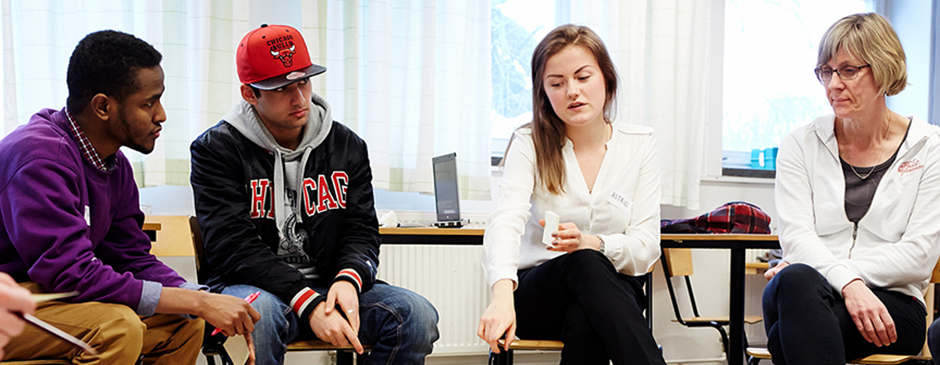
PERARES aimed to strengthen interaction in formulating research agendas between researchers and Civil Society Organizations (CSOs).
These research agendas can be quite local (the topics of research projects at a single university); but they can also be plans for research of a group of universities or even for larger funding programs, national or at the European level.
How did it happen?
PERARES used a myriad of ways to achieve this general objective. In various formats, PERARES generated dialogues on science (including social science, engineering, technology etc.) to actively articulate research requests from civil society and its organizations. These were offered to research institutes and research has started on some of the identified issues. Thus, the dialogues had impact and were more than an exchange of words. Thus, CSOs have an impact “upstream”, i.e. at the start of the research process.
As one way of achieving this joint agenda setting, PERARES has started a transnational web portal for dialogues leading to the articulation of research questions. This has been piloted in the area of nanotechnology, and then every few months a new dialogue started on a new area. Furthermore, some partners piloted and assessed a range of forms of agenda-setting dialogues between researchers and CSOs. These consisted of, e.g., regular meetings over a long period of time (piloted in France and UK), and two separate direct co-operations in two important social science fields: research on domestic violence issues (led from Belgium, UK and Norway) and research with and for Roma/Traveller’s (started from Hungary, Spain and Ireland).
Science shops
To strengthen local co-operation in setting research agenda’s, and to be able to respond to more research requests internationally, it was deemed necessary to enlarge and strengthen the network of research bodies doing research for/with CSOs. Thus, ten new Science Shop-like facilities throughout Europe have been established, mentored by experienced partners. Science Shops mediate or perform research on request by Civil Society Organizations; they are often part of a university, but can be stand-alone organizations as well (www.scienceshops.org). Open training workshops were given as well.
Science Shop-like work and Community Engagement of Higher Education Institutes were further advanced by conducting studies on good practices and policy making, to add to the available knowledge base. Guidelines to evaluate the engagement activities were developed and tested.
Final outcomes
The partners also investigated the potential role of higher education institutes, leading to recommendations for strategies to incorporate civil society driven research in Higher Education. The potential role of research funders in supporting co-operation with CSOs was also studied, by surveying research funders and monitoring a funded post-doc project. PERARES shared its activities with the wider community through two large conferences and continuous dissemination, through its website, annual magazine and quarterly newsletters, and by participating in relevant events and contacting relevant media.
Thus, through increased, better structured co-operation, more researchers and CSOs now engage in incorporating the needs, concerns and knowledge of civil society in research agendas.